|
I
wanted to start off by talking a little bit about your upcoming shows. What exactly goes on during those
shows?
Well, on this particular
leg of the tour – of course people can learn where I am going to be by going to www.CrispinGlover.com. They can sign up for a newsletter, there’s a page they can click to that will do
a slideshow tour. It’s a little confusing… I take… essentially over the years I take
old books from the 1800’s and re-work them and turn them into different books from what they originally were.
And they are heavily illustrated.
When I first started publishing the books, people said to me “well, really you should have a book reading”
– but because they were so heavily illustrated – if I just read the text it would not necessarily make so much
sense, so I knew that having the illustrations projected behind me as I did the book readings was important.
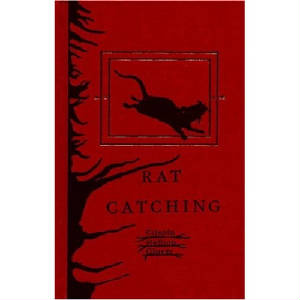 My first book that I published was called Rat-Catching, and that was 1988. I didn’t start performing
with slide shows until 1992, but I took eight of these books and put them together and dramatically narrate these eight different
books, which are profusely illustrated, and those illustrations are projected behind me and I perform an hour long show.
What the original show was, which is now called ‘Crispin Hellion Glover’s Big Slide Show Part 1’
– I have an additional show, which I perform before the second film. So I have two feature films
that I’ll show on subsequent nights. So before ‘What is it?’ I’ll perform ‘Crispin
Hellion Glover’s Big Slide Show Part 1’ and before the second film, in what will be a trilogy… ‘It
is Fine! Everything is Fine”, I’ll perform ‘Crispin Hellion Glover’s Big Slide Show Part 2’. My first book that I published was called Rat-Catching, and that was 1988. I didn’t start performing
with slide shows until 1992, but I took eight of these books and put them together and dramatically narrate these eight different
books, which are profusely illustrated, and those illustrations are projected behind me and I perform an hour long show.
What the original show was, which is now called ‘Crispin Hellion Glover’s Big Slide Show Part 1’
– I have an additional show, which I perform before the second film. So I have two feature films
that I’ll show on subsequent nights. So before ‘What is it?’ I’ll perform ‘Crispin
Hellion Glover’s Big Slide Show Part 1’ and before the second film, in what will be a trilogy… ‘It
is Fine! Everything is Fine”, I’ll perform ‘Crispin Hellion Glover’s Big Slide Show Part 2’.
Now, ‘What is it?’ is a feature film that
I started shooting in 1996 – premiered it at Sundance in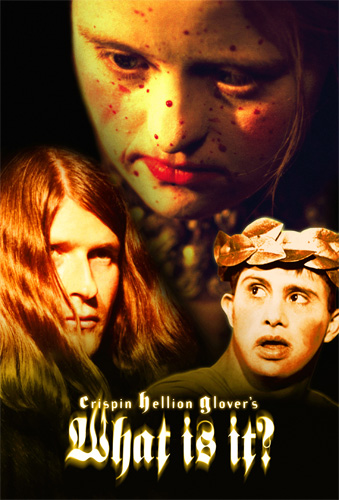 2005 and I’ve been touring with it ever since that. ‘It is Fine! Everything is Fine’
was shot in 2000 and 2001 – and premiered it at Sundance in 2007 – and I’ve been touring with both of the
films ever since that. ‘What is it?’, most of the actors in the film have Down’s Syndrome,
but the film is not about Down’s Syndrome at all. What it really is – is my psychological reactions
to corporate constraints that have happened in the last thirty years. Wherein anything that can make an
audience member uncomfortable is necessarily exercised – so that film will not be corporately funded or distributed.
I think that It’s a very damaging thing – because it’s that moment when an audience member sits back
in the chair and they think to themselves “Is this right that I’m watching? Is this wrong that I’m watching?
Should I be here? Should the film maker have done this? What is it?” – and that’s the title of the film.
And again, I think it’s a very damaging thing because – they keep on asking questions – that’s
education, that’s true education… and when questions are not genuinely being asked… really it’s
the opposite of education, and it’s essentially propaganda. And I do feel like that’s by far
the majority of what is being put forth in cinema and media – all sorts of American institutions. And
that’s ‘What is it?’ is ultimately a reaction to. 2005 and I’ve been touring with it ever since that. ‘It is Fine! Everything is Fine’
was shot in 2000 and 2001 – and premiered it at Sundance in 2007 – and I’ve been touring with both of the
films ever since that. ‘What is it?’, most of the actors in the film have Down’s Syndrome,
but the film is not about Down’s Syndrome at all. What it really is – is my psychological reactions
to corporate constraints that have happened in the last thirty years. Wherein anything that can make an
audience member uncomfortable is necessarily exercised – so that film will not be corporately funded or distributed.
I think that It’s a very damaging thing – because it’s that moment when an audience member sits back
in the chair and they think to themselves “Is this right that I’m watching? Is this wrong that I’m watching?
Should I be here? Should the film maker have done this? What is it?” – and that’s the title of the film.
And again, I think it’s a very damaging thing because – they keep on asking questions – that’s
education, that’s true education… and when questions are not genuinely being asked… really it’s
the opposite of education, and it’s essentially propaganda. And I do feel like that’s by far
the majority of what is being put forth in cinema and media – all sorts of American institutions. And
that’s ‘What is it?’ is ultimately a reaction to.
The second film, ‘It is fine! Everything is Fine’, was written by a man who had a severe case of cerebral
palsy – his name was Steven C. Stewart. Cerebral palsy is not a degenerative disease, somebody is
born with a certain amount of cerebral palsy – it never gets better, it never gets worse… it stays the same.
Steven was born with a relatively severe case of cerebral palsy – and when he was in his early twenties his mother
died and he was placed into a nursing home, and he didn’t want to be there – but he was very difficult to understand
– and the people there that were taking care of him there… some of them would call him an “MR” -
a mental retard, which is not a nice thing to say to anybody. Steven was of normal intelligence –
and the emotional turmoil that he must have gone through for that decade that he couldn’t get out of the nursing home
– I can’t even begin to imagine. But he did get out, and when he did he wrote this screenplay.
It’s written in a style of a 1970’s TV murder mystery movie of the week and he’s the bad guy –
and that was a very important thing for Steve. If you think about it, when you see a corporately funded
distributed film – if you see somebody with a disability in that film – for the most part that character will
be a benefactor to society. There’s nothing really wrong with that, there are certainly all kinds
of people with all kinds of disabilities that are great benefactors to societies – it was very important to Steve that
essentially… I’m not going to say it in the same way that he said it… but essentially he wrestles of course
with a disability, but he’s a person. And completely understood that a person can have dark thoughts,
and in this film he’s the bad guy. [laughs] He really is a bad guy – and that was very important to him.
In this film, in the whole trilogy of films he’s done – ultimately there will be a third part to this as
well – in the whole trilogy he’s done, this film ‘It is Fine! Everything is Fine’ will be the best
film of the trilogy. But not only that, I don’t want to diminish ‘What is it?’ because
I’m proud of that film, but ultimately ‘…Everything is Fine’ I feel like will probably be the best
film I’ll have anything to do with in my whole career. And mainly it’s because there’s
an emotional catharsis of Steven’s character. I hold that in a very high regard.
I’m very passionate about these films. And
essentially, this is how I distribute them – with this wide distribution model that I’m using… which is
based on a vaudeville distribution model. And I’m happy to report – finally at the beginning
of this year recouped on the films. Now when I say recouped, really I recouped fifty-percent of this by
the live shows that I perform. That’s really the greater amounts of where I’m bringing the
recoupment money from – I’ve recouped about twenty-five percent by the box-office of the films and about twenty-five
percent by the sales of my books. So first I perform the live show, show the film and then I have a Q&A
and a book signing. And I don’t make it to where people can only get those signed, they can come
up if they have questions or if they want me to sign something else.
It’s a lot of work. Six years of touring to recoup, but it’s worth
it. What I feel like is coming out in most corporate films – every once in a while there are good
films that come out that are corporately funded and distributed, but for the most part it isn’t that way – and
I am passionate about getting these things out.
That is a very unique way of getting your films out to the public – to have
a live viewing of it.
 Yeah – yeah. And it harkens back to vaudeville – one of the lead ways of distributing was for
people to go around – with either silent short films or even feature films and there would be a narrator of sorts that
would stand up either actually enact some of the words or narrate and tell people what was going on. Of
course it ended up later that the films became the main distribution point. It’s an older model,
but it doesn’t mean it can’t work. It essentially can work and does work – it’s
a lot of work to make it work, but it’s worth it. Yeah – yeah. And it harkens back to vaudeville – one of the lead ways of distributing was for
people to go around – with either silent short films or even feature films and there would be a narrator of sorts that
would stand up either actually enact some of the words or narrate and tell people what was going on. Of
course it ended up later that the films became the main distribution point. It’s an older model,
but it doesn’t mean it can’t work. It essentially can work and does work – it’s
a lot of work to make it work, but it’s worth it.
It’s funny, you know, this “Occupy” [Occupy Wall Street] movement
which has been happening in the past year – of course there are differences, but on some level it is aligned to what
I have been doing in these past six years. Because I am reacting to corporate constraints, and that Occupy
movement is reacting to corporate situations. Of course it has much more to do with business, but essentially
there are great similarities. There are unfortunate corruptions that are happening with corporate controls.
A corporation doesn’t have to be corrupt, there can be good corporations that do good things – a group
of people getting together and doing good things – but unfortunately there can be corruptions and I think there are
a lot of corruptions that are happening both in the corporate film world and of course the corporate business world at large.
I wanted to talk
a little more about how you write your books, it’s a very unique way to write a book. I’m sure
it takes a unique mind to do that as well. So, you just go through an older book – and I’m
assuming they are all public domain books so there are no legal issues?
That’s correct. Most of the books that
I’ve taken were books that were published in the 1800’s. You know, it’s a coincidence
because when I started doing them – the first book I made was 1982 – and right next to the acting class that I
was going to there was an art gallery and upstairs they had an art book store. There was a small section
were some various artists have taken books and made handmaid books, and one person had taken an old book from the 1800’s
and put artwork in it. I liked it, and I thought that was a good idea – I’ve always drawn and
I thought I can just put in some of my artwork – and I was working a lot with India ink at the time. So
I went to an old used bookstore on Melrose and I found a book called Billow and the Rock,
which was published in the 1800’s and I started putting some of my own artwork in it. I always liked
words in art – so there was a page with some words in it that I outlined with India ink – not for a particular
reason, I just liked those particular words. And then I put some other artwork in it and came upon another
page and left some more words in it, and when I was reviewing it I realized a new kind of structure came forth that was completely
removed from what was originally in the book and I liked it – so I kept going with it. I finished
that book and I was very pleased with it. I never published that book, and that book is not at my shows,
but I continued making those books for about a decade from the early 80’s to the very early 90’s.
I’m very proud of the books, but it was coincidence
– I liked working with the books from the 1800’s and it just so happened that they were in public domain.
A lot of the books don’t really utilize anything other than the cover or small elements, they’re not really
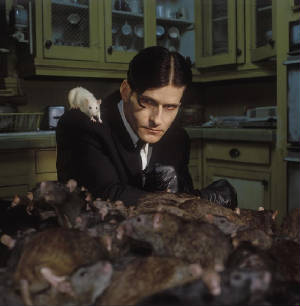
utilizing much of the text. The biggest exception was the first book that I published called Rat-Catching. And even that one, when you compare it to the original
book – it’s enormously different from what the original book was. There were no illustrations
in the original book, and my book has illustrations on every page. The original book is a book written
in England – it was a study on the art of rat catching, and the guy who wrote it had a sense of humor and some of that
humor is retained in the book. Other than that book, all the other books that I have made essentially there’s
not a retainment of any personality or configuration or syntax that was really in the original book. Rat-Catching has a bit of that, which I’m glad it’s in there [laughs] the
guy had a good sense of humor. But even then, it’s very different from what the original book was
and the other books – they don’t retain any personality from the original books.
That’s amazing, I’ve
never heard of anybody doing that.
What’s funny is that
I haven’t either, but I toured for many years since the 90’s with this show and I’ve had people come up
to me and say “Hey, I do this too”, and I talk to them about it. And any time I talk to somebody
that’s done it – it’s always been the same way where they simply discover it themselves. But
there are people that do it. In fact, somebody else published a book I’ve seen at a bookstore not
too long after I published Rat-Catching in the 80’s. But
they did something similar where they took some words from a book in the 1800’s, and I’ve never seen that until
after I published the book.
There’s one book that would probably cause a lot of controversy if you reworked
it, but have you ever thought about working with the Bible?
 No, I wouldn’t do it to the Bible. Mainly because the books that I deal with are obscure, as soon
as I take something that’s not obscure – then it’ll have a context to it that means something to certain
people. Probably the most popular book I ever did it to was this book called Rat-Catching, and that’s not exactly considered a best-seller in this day and age. So
the obscurity is actually very important. No, I wouldn’t do it to the Bible. Mainly because the books that I deal with are obscure, as soon
as I take something that’s not obscure – then it’ll have a context to it that means something to certain
people. Probably the most popular book I ever did it to was this book called Rat-Catching, and that’s not exactly considered a best-seller in this day and age. So
the obscurity is actually very important.
I understand that you are going to do other projects before you actually finish
the “It Trilogy” [‘What is it?’ and ‘It is Fine! Everything
is Fine’], is that correct?
That’s correct. I own property in the Czech Republic, which I bought a number
of years ago now. It’s an old chateau that was built in the 1600’s – and next to it are
some horse stables that I made into small shooting stages. My films, for the most part, are shot on sets.
‘Everything is Fine’ was completely shot on sets and most of ‘What is it?’ was shot on sets.
And I prefer working that way. So for various reasons it made sense for me to own property to do
this on, and I just started building sets within the last four months. I’ve been working on three
simultaneous projects that will all utilize those sets in different ways. The one that I’m focusing
on most and the one that’s mostly developed is something for myself and my father to act in together. He’s
an actor and he and I have never acted together before. So that’s what my main focus has been really
for the last number of years. Like I say, there’s three projects that I’m simultaneously working
on with relatively small variations utilizing similar sets.
Where are some of your upcoming shows?
 The fist show is in Nashville at the Belcourt Theatre on the 6th and 7th [January 2012], and the next weekend I have two shows in Chicago at the Music Box Theatre on the 13th
and 14th, then I’ll go over to Columbus, Ohio at the Grandview
Theater during the week on the 17th and 18th. Then I’ll have a show at Penn State University on
Friday the 20th. Then I’ll have two shows in Buffalo, New York, and I’m forgetting
the name of the venue, but like I said people can find out where it is at www.CrispinGlover.com... that’s on the 25th and 26th. Then on the 27th
and the 28th, I have two shows in Ottawa [at the Mayfair Theatre].
And there’s going to be some more things, I may be having some shows in Atlanta. I just got
an email about that today, and it may not be until February. The fist show is in Nashville at the Belcourt Theatre on the 6th and 7th [January 2012], and the next weekend I have two shows in Chicago at the Music Box Theatre on the 13th
and 14th, then I’ll go over to Columbus, Ohio at the Grandview
Theater during the week on the 17th and 18th. Then I’ll have a show at Penn State University on
Friday the 20th. Then I’ll have two shows in Buffalo, New York, and I’m forgetting
the name of the venue, but like I said people can find out where it is at www.CrispinGlover.com... that’s on the 25th and 26th. Then on the 27th
and the 28th, I have two shows in Ottawa [at the Mayfair Theatre].
And there’s going to be some more things, I may be having some shows in Atlanta. I just got
an email about that today, and it may not be until February.
The best thing for people to do is sign up at www.CrispinGlover.com for the newsletter. But sometimes people don’t like getting so many emails, so there’s
an official Crispin Hellion Glover Facebook page that has the information. I have a Twitter, a Crispin Glover Twitter.
And if someone can’t make it to one of your shows, can they pick up your books on
your website?
Yeah, that’s
right.
Of course the shows are
the best things to do. And if they can’t make the show and they really want me to come to their area,
they can be a bit aggressive and contact a venue and get that venue contact me at Booking@crispinglover.com. This is really how a lot of my shows end up getting booked. I think
people have this idea that I’m sitting – and tomorrow I’m going to book in Miami, Florida. I
say Miami, Florida because never in my life have I been to Miami. And in fact, I’ve only had one
show in Florida – once a long time ago. And I would like to go to Florida, but for whatever reason
it hasn’t happened. So if somebody is out there in Florida and is listening to this – and if
you want me to come, find one of the independent cinemas – it’s important that it’s a 35mm cinema.
Of course my films are 35mm prints. Contact me at Booking@crispinglover.com. I’m very fair and make it so it’s a profitable and easy situation for everybody.
I like to go out and show the films and perform the shows everywhere. I’m perfectly happy
to come anywhere that will have me and that meets the outline… mainly that it’s a 35mm cinema. And
then I’ll come out there. I’m quite passionate about getting the films seen in a wide way.
|